

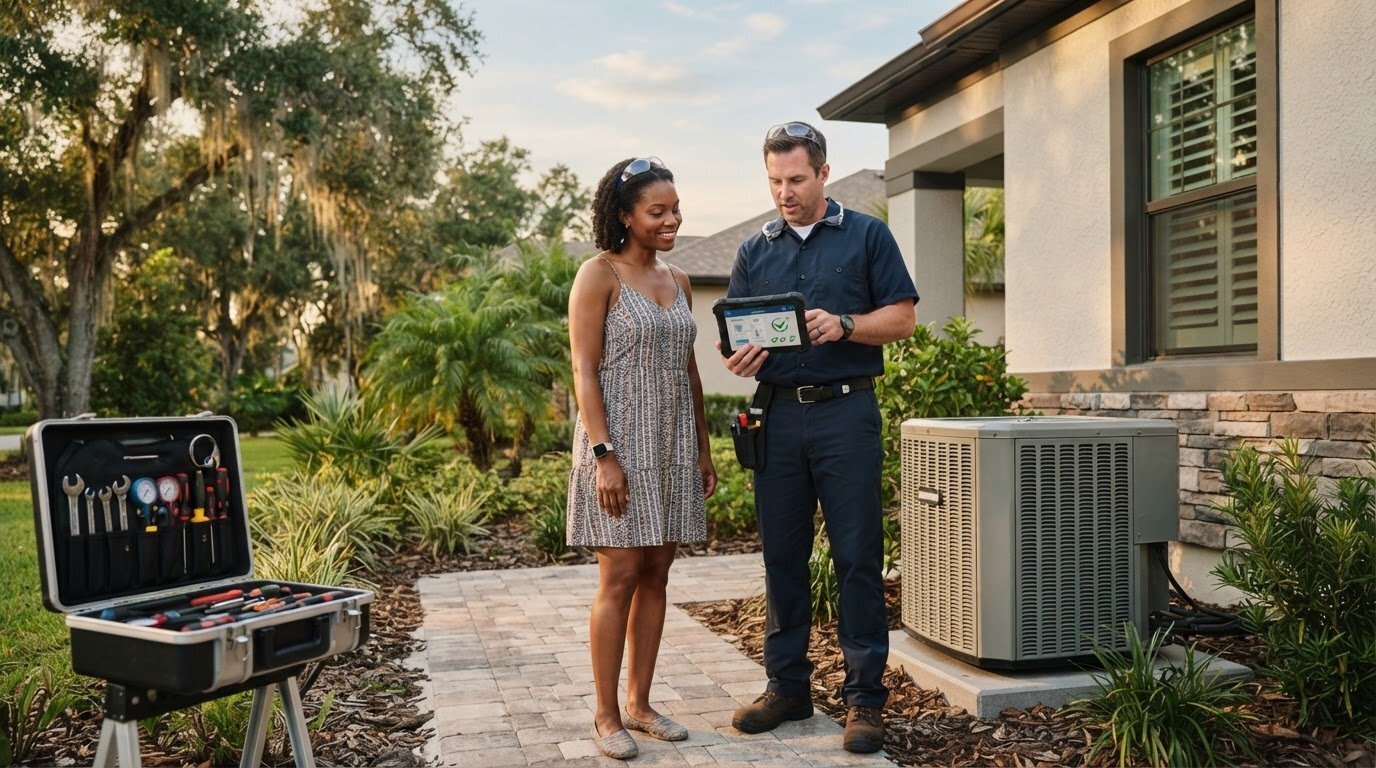

When summer cooling bills climb, your air conditioner may not be the only place to look. For homeowners exploring attic insulation to lower energy bills Florida, the attic is an important part of the picture. Insulation slows heat moving into your home, which may ease the cooling demand on your HVAC system. It is not a guaranteed fix for high bills on its own.
It can be frustrating when rooms still feel warm and energy costs keep rising, especially when the cause could be thin insulation, air leaks, or an HVAC issue. The right next step depends on the attic and the home as a whole, not just one insulation number or a general savings claim.
This guide explains how insulation can affect cooling demand, which signs may justify a closer look, and what to consider before planning an upgrade. You’ll also learn why assessing insulation, air leakage, and HVAC performance together can help you make a more informed decision.
Key Takeaways
- Learn how attic insulation can slow heat entering your living space and affect cooling demand during Florida’s long, hot season.
- Understand why insulation gaps, air leaks, and moisture are different clues that may call for different responses.
- See what to consider when comparing attic insulation to lower energy bills Florida, including existing insulation and attic conditions.
- Use safe observations and comparable utility-bill periods to gather useful information without entering or disturbing the attic.
- Find out how a home-specific assessment can help shape an upgrade around your attic, construction, and comfort concerns.
How Attic Insulation Can Lower Energy Bills in Florida Homes
Attic insulation is installed between the attic and living space to slow heat moving through the ceiling. It acts as a thermal barrier. It does not cool the home by itself, but it can limit how quickly attic heat enters conditioned rooms. This is part of the broader Principles of Insulation, which explain how insulation reduces heat transfer.
When less heat passes into the home, the air conditioner may have less work to do to maintain a comfortable indoor temperature. The effect varies by home. Insulation is one part of the building’s energy picture, not a standalone promise of lower bills.
Why Florida attics can add to cooling demand
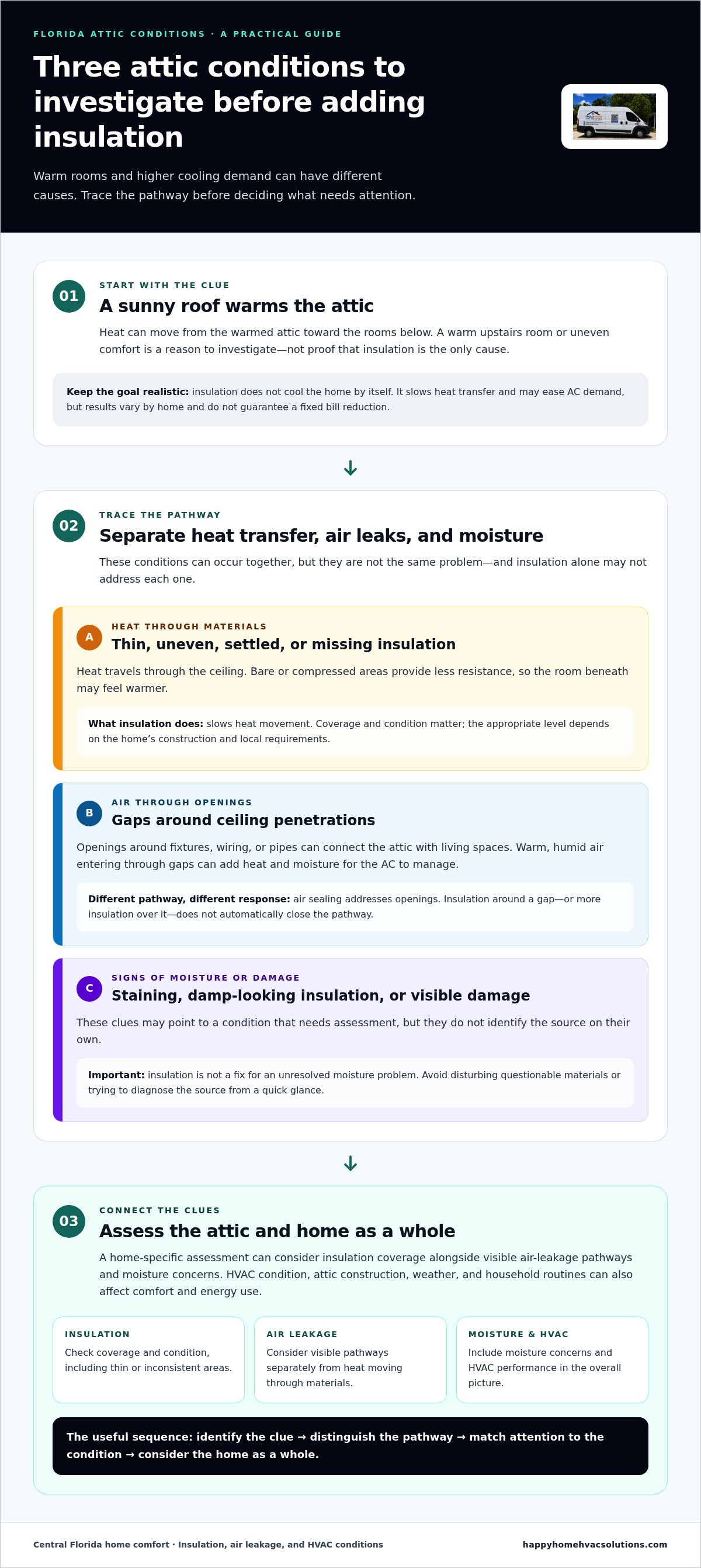
On sunny days, the roof absorbs heat and warms the attic below it. If the ceiling has thin, settled, uneven, or missing insulation, some of that heat can move into the rooms beneath it. Those rooms may feel warmer, particularly during Central Florida’s long cooling season, when the AC is already in regular use.
When heat continues entering the home, the air conditioner may run longer or cycle more often to keep the thermostat near its setting. The added workload varies with sun exposure, ceiling construction, insulation coverage, and HVAC condition. A warm upstairs room is a clue worth investigating, but it does not prove insulation is the only cause. Air leaks and duct conditions can also affect comfort and energy use.
What insulation can, and can’t, do for a power bill
Insulation slows heat transfer. It does not remove heat already inside the home or replace an air conditioner. If attic insulation is weak or inconsistent, improving the barrier may reduce how much heat reaches living areas and may ease cooling demand. That can support lower energy use, but it does not guarantee a fixed dollar saving for every household.
The search for attic insulation to lower energy bills in Florida reflects a reasonable goal, but results depend on more than insulation. Two homes with similar insulation may use different amounts of electricity because of thermostat settings, occupancy, or equipment use. Weather, household routines, HVAC condition, and attic construction also matter.
That is why broad savings claims are difficult to apply to an individual home. A useful assessment considers existing insulation coverage and the conditions around it, then connects those observations to comfort and HVAC workload. Happy Home HVAC Solutions provides insulation services in Central Florida, with recommendations based on the home’s observed needs rather than a promised bill reduction.
How Attic Heat, Air Leaks, and Humidity Affect Florida Energy Use
Attic heat can affect a home in more than one way. Heat moves through solid ceiling materials, while air can pass through gaps and carry heat and moisture with it. These processes can happen at the same time, but they are not interchangeable. Insulation slows heat transfer; air sealing addresses openings. This distinction helps explain why adding insulation alone may not resolve every comfort concern or source of energy loss.
Heat transfer from the attic into living spaces
Consider a bedroom directly beneath an attic on a sunny Central Florida afternoon. As the roof and attic warm, heat can travel through the ceiling into the room. Insulation slows that movement, but coverage and condition matter. A bare or compressed area provides less resistance to heat flow than the surrounding ceiling, so the room below may feel warmer than other parts of the home.
This is heat moving through materials, not necessarily air entering the room. Local building requirements and the home’s design affect the appropriate insulation level, so one R-value should not be treated as a universal target. The home’s construction and existing attic conditions matter when deciding what to improve.
Air leakage, moisture, and the limits of insulation alone
Air leakage follows a different route. Small openings around ceiling fixtures, wiring, pipes, or other penetrations can connect the attic with the living space. If warm, humid air enters through these gaps, the AC may need to remove additional heat and moisture while maintaining indoor comfort. Insulation around an opening does not automatically close it, and covering a gap with more material may leave the pathway intact.
Moisture clues also deserve attention. Staining, damp-looking insulation, or visible material damage may point to a condition that needs assessment. These signs do not identify the source on their own, and insulation is not a fix for an unresolved moisture problem. Avoid disturbing questionable materials or trying to diagnose a roof, plumbing, or ventilation issue from a quick glance.
For homeowners considering attic insulation to lower energy bills Florida, separate the questions: Is heat moving through under-insulated ceiling areas? Is air escaping through gaps? Are moisture signs affecting the attic or insulation? Each condition can influence comfort and energy use, but may need a different response. Household routines, weather, HVAC condition, and attic construction also help explain why homes can respond differently to similar insulation work.
A professional assessment can consider insulation coverage alongside visible air-leakage pathways and moisture concerns, helping clarify which factors deserve attention. If insulation is part of the solution, Central Florida insulation services can help connect the home’s conditions with a practical next step.
Which Florida Attic Insulation Upgrade Factors Matter Most?
A useful upgrade starts with the attic’s actual condition, not a “best” material list or a savings estimate borrowed from another home. Insulation coverage, air leakage, moisture signs, and attic design are separate factors. They can overlap, but each raises a different question: Is the thermal barrier consistent? Are there openings for air to pass through? Is moisture affecting the space or its materials?
R-value describes how strongly insulation resists heat flow. It is not a direct estimate of household savings, and a higher number alone does not account for gaps, construction, or other influences on energy use. Recommendations should reflect the home and applicable local requirements, rather than treating one target as right for every Florida attic.
Existing insulation: coverage, condition, and R-value
From a safe viewing point, look for bare patches, compressed areas, uneven depth, or places that appear disturbed. These observations can help guide an assessment, but they do not establish the insulation’s exact performance. R-value depends on the material and its condition, and visible depth alone may not tell the whole story.
Take extra care in older homes. Do not pull up, move, or handle unfamiliar or damaged material to identify it. A professional assessment can consider existing coverage and condition without turning a quick inspection into a risky DIY project.
Insulation, air sealing, and attic ventilation
Adding insulation increases resistance to heat moving through the ceiling; sealing air pathways targets gaps around penetrations and other openings. One measure does not automatically accomplish the other. Ventilation should also be considered as part of the attic assembly, rather than changed as a standalone fix. The home’s construction helps determine how these elements should work together.
The comparison below is a starting point for understanding possible assessment directions, not a ranked list or project prescription.
| Approach | Intended function | Conditions that may affect suitability |
|---|---|---|
| Improve insulation coverage | Slow heat flow through the ceiling | Existing material, gaps, compression, ceiling layout, and applicable recommendations |
| Address air pathways | Reduce air movement through openings | Location and size of gaps, nearby components, and how the ceiling is constructed |
| Review attic ventilation | Consider air movement as part of the attic design | Vented or unvented assembly, existing ventilation, and the overall project plan |
| Assess moisture concerns | Identify conditions that could affect the attic or insulation | Visible staining, dampness, material damage, and the underlying source |
For homeowners exploring attic insulation to lower energy bills Florida, the practical takeaway is to match the work to the observed issue. An insulation assessment can bring coverage, attic conditions, and comfort concerns into one picture, helping clarify what deserves attention before an upgrade is planned.
How to Assess Your Attic and Track Potential Energy-Bill Changes
A few careful observations can help you describe comfort problems and attic conditions before planning an upgrade. You do not need to climb across the attic or handle insulation to gather useful clues. Start with the rooms you use every day, then look from an accessible attic entrance only if it is safe to approach. Keep dated notes so you can compare observations over time.
A homeowner-safe attic and comfort check
Use this process to record what you can see without stepping on framing, moving materials, or entering an area without safe access. If you notice damage or unfamiliar material, leave it undisturbed and note what you observed.
- 1. Track room comfort. Note which rooms feel warmer, when the difference occurs, and whether it changes during the day.
- 2. Observe AC patterns. Record when the system seems to run longer than usual or struggles to maintain your preferred setting. These are clues, not a diagnosis.
- 3. Look from the attic entrance. If access is safe, note visible bare patches, uneven insulation, or areas that appear compressed or disturbed. Do not walk on ceiling framing or reach into the attic.
- 4. Note possible moisture concerns. Record visible staining, damp-looking material, or damage from your safe viewing position. Do not touch or disturb suspect older materials.
- 5. Keep a dated log. Add changes in thermostat settings, household routines, or HVAC condition so later comparisons have context.
For a broader overview of what an installation assessment may consider, the Attic Insulation Installation in Orlando: The 2026 Homeowner’s Guide to Energy Efficiency offers related guidance.
Compare energy use without assuming every change came from insulation
Utility bills are most useful when you compare similar seasons, such as one summer period with another, rather than a hot month with a mild one. Review electricity use as well as the bill total when both are available, since rates and other charges can change independently of how much energy the home uses.
Record factors that may affect each period, including outdoor weather, thermostat settings, time spent at home, visitors, and changes in HVAC condition or use. If insulation work is completed, keep tracking these details afterward. A change in energy use or comfort can be a helpful indicator, but it does not prove insulation was the sole cause.
For homeowners considering attic insulation to lower energy bills Florida, these notes make an assessment more informative. Share comfort patterns, visible concerns, and comparable bill records with Happy Home HVAC Solutions when discussing a home-specific insulation assessment. The goal is to understand what the attic and the household’s energy history suggest, not to promise a particular bill change.
Plan an Attic Insulation Upgrade with a Central Florida Home Assessment
A useful insulation plan should reflect what is happening in your attic and how your home feels, rather than assume the same fix suits every property. A professional assessment can consider existing coverage, visible attic conditions, and recurring comfort concerns together. This helps distinguish areas that may benefit from insulation work from conditions that could affect the project’s scope or need further attention.
What a home-specific insulation assessment should clarify
An assessment should help you understand the condition and distribution of insulation, including visible areas that appear uneven or incomplete. It can also consider attic construction and access, along with signs of air leakage or moisture that may influence planning. These details matter because a recommendation for one home may not suit another with different construction or attic conditions.
Bring your comfort priorities into the conversation. You might be focused on a consistently warm room, the cooling system’s workload, or whether insulation could be part of a broader efficiency improvement. Clear priorities help connect recommendations to the problems you have observed, rather than to a generic promise of lower bills. Any expected effect on energy use varies with weather, household routines, HVAC condition, and the home itself.
A practical next step for Central Florida homeowners
Before discussing a project, gather recent utility bills if available and note when particular rooms feel uncomfortable. Add safe, visible attic observations, such as patchy coverage or signs of damage. Do not investigate by moving insulation or entering an unsafe area. A concise record gives the assessment a useful starting point and helps connect the home’s energy history with visible conditions.
Happy Home HVAC Solutions is a family-owned Central Florida company offering insulation services alongside HVAC services. The assessment can put the home’s construction, existing coverage, and comfort concerns into context, then inform a practical recommendation based on observed needs. It cannot promise a specific reduction in utility bills, but it can give you a clearer basis for deciding whether an upgrade makes sense and what the project should address.
If you are considering attic insulation to lower energy bills Florida, gather your notes and explore Central Florida insulation services from Happy Home HVAC Solutions. A home-specific conversation can help you move from uncertainty toward a plan focused on comfort, energy use, and your attic’s conditions.
Make Your Next Home-Comfort Decision with Confidence
You do not need to solve every attic concern at once. Choose one practical starting point: write down the comfort issue you most want to address, such as a persistently warm room or cooling costs that feel difficult to manage. This gives an assessment a clear focus and keeps the conversation centered on what matters in your home.
For homeowners considering attic insulation to lower energy bills Florida, a home-specific plan is more useful than a broad savings promise. Insulation may support comfort and reduce cooling demand, but bill results depend on the home and how it is used. An assessment can help you understand whether an upgrade fits your priorities before you decide how to proceed.
Happy Home HVAC Solutions is a family-owned and operated Central Florida company, and its licensed HVAC business offers insulation services. Explore attic insulation services for your home and take a confident step toward a more comfortable home in Orlando, Oviedo, Winter Springs, Winter Park, or Altamonte Springs.
Frequently Asked Questions
Can attic insulation lower energy bills in Florida?
Yes, attic insulation can help reduce cooling demand, so it may support lower energy use, but it cannot guarantee a specific bill reduction. For a home in Orlando, the result depends partly on the attic’s current condition and the AC system’s performance. Compare energy use across similar seasons, and account for changes in weather, thermostat settings, or household routines before attributing a difference to insulation.
How do I know if my Florida attic needs more insulation?
Visible thin spots, uncovered areas, or compressed material can be reasons to arrange an assessment, especially if an upstairs room stays uncomfortable. In Orlando, Oviedo, Winter Springs, Winter Park, and Altamonte Springs, home age and construction can differ, so these clues are not a diagnosis or an upgrade specification. Observe only from a safe access point. Do not walk on framing or disturb older, unfamiliar insulation to inspect it.
Does attic insulation help an air conditioner work less?
It can, if reducing heat transfer through the ceiling lowers some of the cooling demand. To understand whether that may be happening, note whether the AC runs longer during hot afternoons or certain rooms lag behind the thermostat. Those observations do not identify the cause by themselves. Duct conditions, system maintenance, thermostat settings, and household activity can also influence runtime, so consider them alongside attic insulation.
Is attic insulation enough to stop air leaks in a Florida home?
No, insulation does not automatically seal openings. If you notice drafts near ceiling fixtures or around attic access, record where and when they occur rather than assuming more insulation will close the gaps. Air movement and heat transfer are separate issues, and moisture may have a different cause. An assessment can help distinguish which conditions appear relevant and avoid treating one material addition as a fix for every concern.
Does FPL offer a rebate for attic insulation in Florida?
As of October 2026, FPL offers a $220 instant rebate for qualifying ceiling-insulation upgrades. Eligibility includes a home built before 1982 with existing attic insulation below R-8, with installation to at least R-30 in Climate Zone 1 or R-38 in Zone 2 by a participating independent contractor. Program rules can change, so review FPL’s current requirements before planning around the incentive.
Can attic insulation help with Florida heat and humidity?
It may help limit heat entering through the ceiling, but it does not remove moisture from indoor air or correct a water source. If you notice musty odors, staining, or damp-looking material, record where you see or smell it and when it occurs. Do not cover the area or disturb the insulation. Those details can help an assessment consider moisture concerns separately from insulation needs.
Should I add insulation over the material already in my attic?
Sometimes existing insulation can remain, but the right choice depends on its condition, coverage, and the attic’s construction. For example, adding material over an area with visible dampness or damage may leave an underlying concern unaddressed. Avoid handling unknown older material or covering signs of a problem. A professional assessment can identify the conditions present and help determine whether adding insulation or taking another step better fits the home.