

You wake up to a rare 40-degree morning in Central Florida, flip your thermostat to "Heat," and wait for that familiar comfort. Instead, you're met with a strange burning smell or the sound of your outdoor unit struggling to kick on. These issues often arise because the consistent heating system maintenance Orlando FL homes require is easy to forget during our long, hot summers. It's a stressful moment that many of our neighbors face when their equipment sits idle for months. We understand that you might feel caught between the fear of a fire hazard and the dread of high repair fees during a sudden cold snap.
This guide provides the peace of mind you deserve by teaching you how to troubleshoot common failures safely. We'll help you understand the difference between heat pump and furnace operation, identify DIY-friendly fixes, and know exactly when it's time to call a licensed expert who stands behind their work with a strong warranty. You'll finish this article with a clear roadmap to restore warmth to your home sanctuary without the guesswork. Whether it's a simple filter change or a complex mechanical fix, we're here to help you navigate the winter months with confidence.
Key Takeaways
- Understand how Orlando’s humidity causes "summer dormancy" corrosion and learn the critical safety steps to take before you touch your thermostat.
- Master a safe "Power Cycle" reset and learn why routine heating system maintenance Orlando FL is the best defense against ignition failures.
- Identify common mechanical culprits like faulty reversing valves or dirty flame sensors to determine if your problem is a quick fix or needs a professional.
- Apply the "50% Rule" to evaluate repair costs against system age, helping you choose the most financially sound path for your home's comfort.
- Discover how working with an LG-certified, family-owned team ensures your repair is backed by dependable expertise and long-term warranty protection.
Understanding Heating System Failure in the Orlando Climate
Heating system repair is the process of diagnosing and fixing malfunctions in your home's furnace or heat pump to restore safety and comfort. In our region, this task is unique because our units spend most of the year fighting humidity rather than providing warmth. Because we rarely see freezing temperatures, many homeowners overlook the need for heating system maintenance Orlando FL requires until that first unexpected cold front arrives. When the system finally struggles to engage, the culprit is often months of inactivity rather than simple wear and tear.
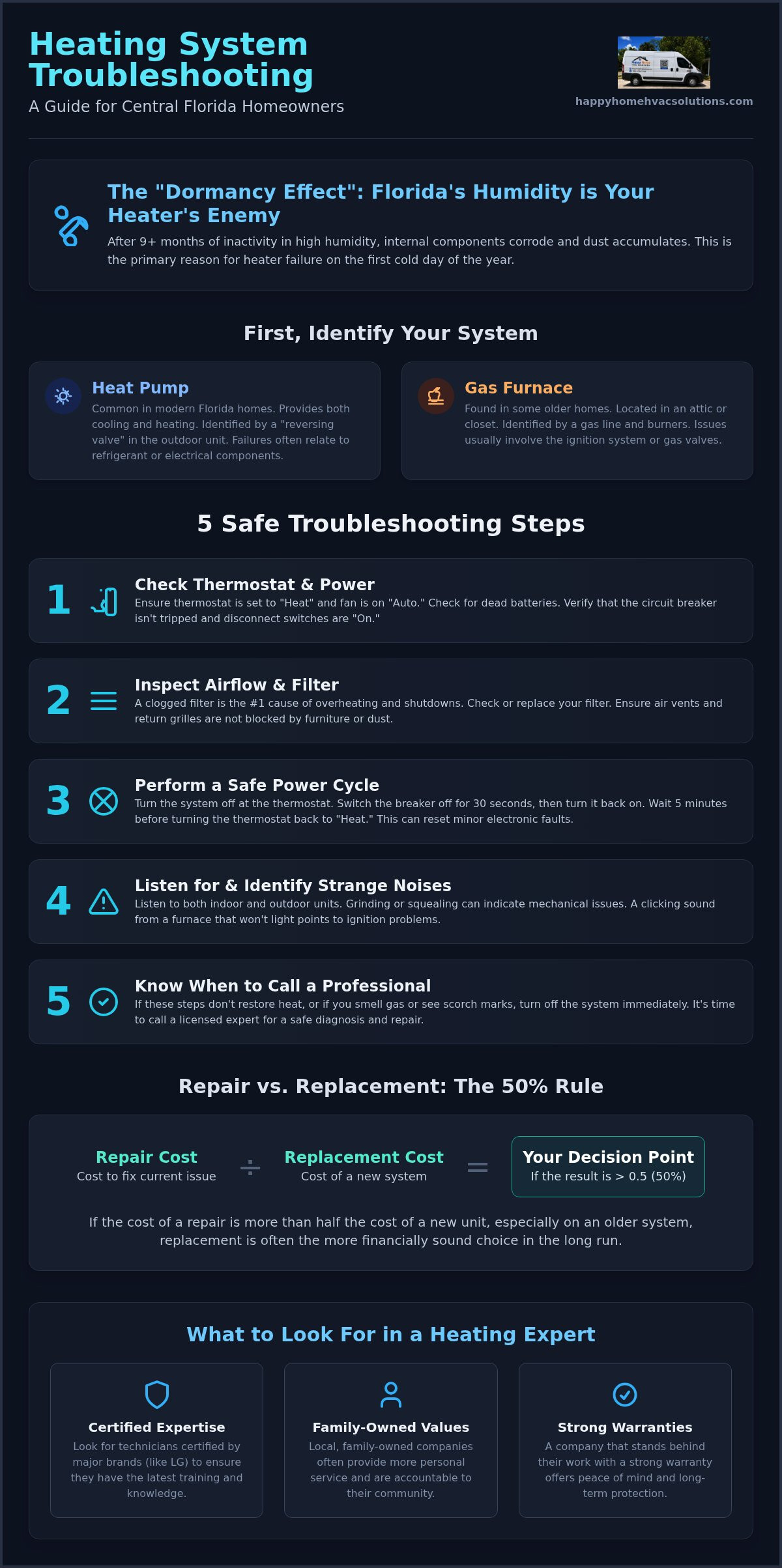
The "Dormancy Effect" is the primary reason for heater failure in Central Florida. When a system sits idle for nine months in high humidity, internal components don't just rest; they corrode. Moisture settles on sensitive parts, leading to electrical shorts or mechanical seizing when you finally flip the switch in December. This long period of dormancy makes the first start-up of the year a critical moment for your home's Heating, ventilation, and air conditioning (HVAC) equipment.
Why Florida Humidity is Your Heater's Secret Enemy
During the long summer months, moisture builds up on heat exchangers and electrical contacts inside your unit. This causes oxidation, which can prevent the system from starting when you need it most. Additionally, dust accumulation on the heating elements creates a distinct burning smell during the first run of the season. While this "burning dust" odor is common and usually temporary, it can be difficult to distinguish from a true electrical hazard without a professional eye. For residents in coastal-adjacent areas like Oviedo or Winter Springs, salt air adds another layer of trouble, accelerating the wear on outdoor coils and fins.
Heat Pumps vs. Furnaces: Which One is in Your Attic?
Understanding your specific system is the first step toward a safe repair. Most modern homes in Central Florida utilize a heat pump. You can identify this by looking at your outdoor unit; if you see a component called a reversing valve, it's a heat pump that provides both cooling and heating. These systems are highly efficient but rely on complex refrigerant cycles to move heat into your home.
Conversely, some older homes or specific builds feature a gas furnace. You'll find these in a closet or attic, identified by a gas line and a set of burners. The repair needs for these systems differ drastically. A heat pump failure often involves refrigerant levels or electrical components, while furnace issues typically center on ignition systems or gas valves. Regardless of which setup you have, regular heating system maintenance Orlando FL experts provide can prevent these dormant components from failing when the temperature drops.
5 Steps to Safely Troubleshoot Your Heating System
When your home sanctuary feels like an ice box, it's easy to worry about expensive repairs. Before you assume the worst, there are several safe steps you can take to identify the problem. Many heating issues in Central Florida are caused by simple oversights or the "dormancy effect" we discussed earlier. Regular heating system maintenance Orlando FL experts recommend often prevents these simple oversights, but if you're already facing a chill, follow this guide to see if you can restore warmth safely.
Step 1: The Thermostat and Power Check
It sounds simple, but start with your thermostat settings. Ensure the system is switched from "Cool" to "Heat" and that the fan is set to "Auto" rather than "On." If the display is blank, your batteries might be dead. Next, check your electrical panel for a tripped breaker. You should also verify the indoor and outdoor disconnect switches are in the "On" position. While some heating technologies are complex, as seen in these Common Boiler Troubleshooting Scenarios, most Orlando systems fail due to basic power interruptions.
Step 2: Airflow and Filtration Barriers
Airflow is the lifeblood of your HVAC system. A dirty or clogged filter is the number one cause of a furnace "limiting out." This happens when the system overheats because air can't move across the heat exchanger, causing a safety switch to shut everything down. Check your return air grilles for dust blockages and ensure no furniture is obstructing your vents. For a more detailed look at protecting your equipment, review The Ultimate Central Florida Furnace Repair & Safety Checklist to perform a full safety audit of your home.
If your power and filters are clear, try the "Power Cycle" method. Turn your thermostat to "Off" and flip the heater's breaker at the main panel. Wait for at least five full minutes before flipping the breaker back on and setting the thermostat to "Heat." This gives the control board a chance to reset its logic and clear minor errors. It's a safe way to reboot the system's "brain" without touching any internal components.
Finally, walk through your home to ensure all registers are open. Closing too many vents can create backpressure that damages your blower motor. If you've tried these steps and still don't feel warm air, the problem likely requires a professional touch. Our team at Happy Home HVAC Solutions is always here to provide the dependable, neighborly care you need to get your system back on track.
Common Causes of Heating Failure in Central Florida
Mechanical failures in our region usually stem from the extreme transition between humid summers and the sudden demand for warmth. Electrical malfunctions are among the most frequent culprits. Capacitors and contactors often suffer during our intense summer storm season. Frequent power surges can weaken these components, causing them to fail exactly when you need them for winter comfort. This is why heating system maintenance Orlando FL is so valuable; it allows a technician to test these parts before they leave you stranded.
Blower motor burnout is another common result of neglect. If your system has been struggling against restricted airflow from a dirty filter, the motor must work harder and run hotter than intended. Over time, this stress leads to a total mechanical seizure. Catching a strained motor early is much more affordable than a full replacement in the middle of a cold snap. Maintaining your system's cleanliness ensures that these internal components don't have to fight for every cubic foot of air they move.
Gas Furnace Specific Issues
For homes with gas units, ignition failure is a top service call. A very common issue is a dirty flame sensor. This small rod detects the presence of a flame to ensure gas isn't flowing into your home without burning. If it's covered in oxidation from months of summer humidity, it won't "see" the fire and will shut the system down for safety. Our technicians often find that a simple, professional cleaning of this sensor restores heat immediately.
- Cracked heat exchangers: These are a critical safety risk. Cracks allow carbon monoxide to enter your living space, making annual inspections essential for your family's protection.
- Inducer motor failure: This motor must start first to clear the exhaust flue. If it fails to engage, the entire ignition sequence stops before it even starts.
Heat Pump Specific Issues
Since most Orlando homes utilize heat pumps, we often see issues with the reversing valve. This component is responsible for switching the unit between cooling and heating modes. If it gets stuck, your unit might continue blowing cold air even when the thermostat calls for heat. Additionally, low refrigerant levels prevent the "heat transfer" process, leaving your home chilly despite the system running constantly. Regular heating system maintenance Orlando FL helps identify these leaks before they lead to a complete system shutdown.
- Defrost cycle failure: If this cycle malfunctions, your outdoor unit can turn into a block of ice on a cold night. This prevents the heat pump from absorbing heat from the outside air.
- Auxiliary heat strips: These electric strips provide backup when it's too cold for the heat pump to keep up. While they restore heat quickly, they are much more expensive to run and can lead to a surprise on your next power bill.
Heating Repair vs. Replacement: Making the Decision
Deciding whether to sink money into a repair or invest in a new system is a significant moment for any homeowner. We aim to provide the transparency you need to choose the path that offers the best long-term value. While consistent heating system maintenance Orlando FL homeowners schedule can extend a system's life, every machine eventually reaches its limit. We've seen many neighbors struggle with this choice, and we're here to help you weigh the options with confidence.
The "50% Rule" serves as a helpful benchmark. If a repair quote exceeds half the value of a brand-new system, replacement is usually the smarter investment. This is especially true for units in the "danger zone" of 10 to 12 years old. In Central Florida, the combination of high humidity and salt air means systems often age faster than they would in drier climates. Once a unit hits that decade mark, finding replacement parts becomes more difficult and expensive.
Calculating the Real Cost of Heating Repairs
Diagnostic fees and labor costs can add up quickly, especially during a rare Florida cold front when demand for service peaks. It's also vital to consider the type of refrigerant your system uses. If your older unit still relies on R-22, the cost of fixing a leak can be astronomical because that refrigerant is no longer produced. For a better understanding of what a full system upgrade might look like, you can review our guide on AC Installation in Sanford, FL to see how replacement costs are structured.
Signs You Need an Immediate Replacement
Certain mechanical issues indicate that a system is beyond a simple fix. Frequent short-cycling, where the unit turns on and off every few minutes, often signals a failing compressor or an improperly sized system. Corroded coils are another major red flag. Once the metal begins to pit and leak, a permanent repair is rarely possible. Finally, if your system can no longer maintain a 20-degree temperature difference from the outdoor air, it has lost its functional capacity.
Upgrading to a modern, SEER2-rated system doesn't just restore heat; it also significantly lowers your monthly utility bills through improved efficiency. If you're unsure which direction to take, contact our expert team today for a professional evaluation that prioritizes your home's peace of mind.
Why Choose Happy Home for Heating Repair in Orlando?
Choosing a partner to enter your home sanctuary is a decision based on trust. At Happy Home HVAC Solutions, we operate with a simple philosophy: treat every customer like a neighbor. As a family-owned and licensed contractor, we prioritize your peace of mind over quick transactions. Our proactive approach to heating system maintenance Orlando FL families rely on ensures that we look beyond surface-level fixes to protect your long-term comfort. We don't just restore heat; we restore your home's sense of security.
We specialize in precision diagnostics. Instead of merely treating a symptom, such as a blown fuse or a stuck valve, our technicians investigate the root cause to prevent future breakdowns. This commitment to quality is backed by our industry-leading protection. We offer up to a 12-year warranty on installations, providing a level of security that far outlasts the competition. Whether you are in Lake Mary, Oviedo, or Winter Springs, you can count on us for dependable, transparent service that puts your needs first.
LG Certified Expertise for Modern Homes
Modern heating technology requires specialized knowledge. As an LG Certified HVAC Contractor, our team undergoes rigorous training to handle high-tech systems, including high-efficiency heat pumps and mini-splits. This certification means we have the specific tools and technical insights to service complex inverter technology that general contractors might overlook. If you are considering an upgrade to zonal heating, our expertise in Ductless Mini Split Installation in Orlando ensures your new system is configured for maximum efficiency from day one.
Our Transparent Service Process
We believe that clarity is the foundation of a good relationship. When a Happy Home technician arrives at your door, you can expect a methodical and professional experience. We begin with a comprehensive evaluation of your entire system, followed by a clear explanation of our findings. You will receive upfront pricing before any work begins, ensuring there are no surprises on your final bill. Our local reputation in Central Florida is built on this foundation of honesty and straightforward communication. We take pride in our workmanship and value the long-term relationships we've built across the Orlando area. Your comfort is our mission, and we're dedicated to maintaining a warm, safe living environment for your family throughout the winter months.
Restore Your Home Sanctuary Today
Understanding that Orlando’s humidity is a silent threat to your heater helps you stay ahead of seasonal failures. By following safe troubleshooting steps and prioritizing the heating system maintenance Orlando FL homes need, you can avoid the stress of unexpected breakdowns. Making an informed choice between a quick repair and a full system upgrade ensures your family stays warm while protecting your long-term budget. We've covered how to identify the root causes of failure and when the "50% rule" should guide your next steps.
As a licensed and family-owned business, we are here to act as your trusted expert guide. Our team of LG Certified HVAC Contractors provides precision repairs and high-efficiency installations backed by an industry-leading warranty of up to 12 years. We prioritize your comfort and safety in every service call we perform across Central Florida. Schedule Your Professional Heating Repair with Happy Home HVAC Solutions to reclaim your peace of mind and restore your home's warmth. We look forward to serving you and keeping your home comfortable all winter long.
Frequently Asked Questions
Is it normal for my heater to smell like it's burning when I first turn it on?
Yes, a faint burning smell is common when you first activate your heater after a long Orlando summer. This odor is usually just dust burning off the heating elements or heat exchanger. If the smell doesn't dissipate within 30 minutes, or if you see smoke, turn the system off at the breaker immediately. Persistent smells could indicate electrical issues or a failing blower motor that requires professional attention to keep your family safe.
How much does a typical heating repair cost in Orlando?
Repair costs vary based on the complexity of the mechanical failure and the specific parts required for the fix. A standard diagnostic fee covers the technician’s time to identify the root cause, while additional charges apply for labor and components like capacitors or control boards. Investing in regular heating system maintenance Orlando FL homeowners trust can often prevent the need for these expensive, unexpected repairs by catching minor wear before it leads to a total system shutdown.
Why is my heat pump blowing cold air in heat mode?
Your heat pump might blow cold air if it is stuck in cooling mode due to a faulty reversing valve. It could also be performing a defrost cycle to melt ice off the outdoor coils, which temporarily sends cool air inside. If the air stays cold for more than ten minutes, you may have low refrigerant levels or a malfunctioning sensor. These issues prevent the unit from effectively transferring heat into your living space.
Can I change my own furnace filter, or do I need a professional?
You can absolutely change your own furnace or air handler filter, and doing so is one of the best ways to protect your system. We recommend checking your filter every 30 days, especially during the transition from cooling to heating seasons. A clean filter ensures proper airflow, which prevents the heat exchanger from overheating and shutting down. If you're unsure where your filter is located, a technician can show you during a routine visit.
What are the signs that my furnace is leaking carbon monoxide?
Signs of a carbon monoxide leak include a yellow or flickering burner flame instead of a steady blue one. You might also notice heavy condensation on windows or soot streaks around the furnace cabinet. Physical symptoms like unexplained headaches, dizziness, or nausea among family members are critical warning signs. If you suspect a leak, leave the home immediately and call for professional help, as cracked heat exchangers are a serious safety hazard for your family.
How long does a heating system typically last in Florida's humidity?
In Central Florida's high humidity, a heating system typically lasts between 10 and 15 years. The "dormancy effect" causes internal components to corrode during the long months when the heater isn't in use. Salt air in areas near the coast can further accelerate this wear. While some units may last longer with meticulous heating system maintenance Orlando FL experts provide, most homeowners find that reliability starts to decrease significantly after the twelve year mark.
Do I need a special permit for heating system repair in Orlando?
Minor repairs like replacing a capacitor or cleaning a flame sensor generally do not require a permit in Orlando or Orange County. However, if the repair involves replacing major components like the heat exchanger or the entire outdoor unit, a residential mechanical permit is legally required. Licensed contractors handle the permitting process to ensure the work meets the 8th Edition of the Florida Building Code, which protects your home's safety and property value.
Why is my thermostat screen blank when I switch to heat?
A blank thermostat screen often indicates a simple power issue, such as dead batteries or a tripped circuit breaker in your main panel. In some cases, a clogged condensate drain line can trigger a safety float switch that cuts power to the entire HVAC system to prevent water damage. If replacing the batteries and checking the breaker doesn't restore the display, there may be a deeper electrical fault or a blown fuse on the control board.